Search behaviour around perfume has changed. Instead of “which Chanel perfume should I buy”, more UK shoppers now search things like “warm vanilla amber evening fragrance”, describing exactly what they want a scent to smell like before a single brand name enters the picture. That shift makes one skill genuinely useful: knowing how to actually read a note pyramid, so you can tell from a product page whether a fragrance will suit you before you buy it.
What a note pyramid actually represents
A note pyramid isn’t a list of ingredients thrown together, it’s a timeline. Fragrance molecules evaporate at different speeds, and perfumers deliberately layer three tiers of notes so a composition changes character over several hours rather than smelling identical from first spray to last trace.
| Tier | How Long It Lasts | What It Does |
|---|---|---|
| Top Notes | First 5 to 15 minutes | The initial impression, usually the lightest, most volatile molecules |
| Heart Notes | 20 minutes to 2 hours in | The main character of the fragrance once it settles |
| Base Notes | 2+ hours through to the end of wear | The lasting foundation, usually the heaviest, longest-lingering molecules |
A real example, broken down
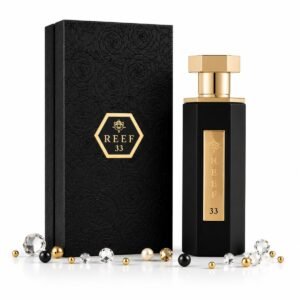
Take Reef 33, one of our most established fragrances, as a working example of how this actually plays out on skin:
- Top: Indian saffron opens the fragrance rich and golden, immediately warm and spiced rather than light or citrus-led, an unusual top note choice that signals from the very first minute this isn’t a fresh, fleeting scent.
- Heart: Rosemary follows with a crisp, herbal edge, balancing the saffron’s warmth with something fresher and greener as the fragrance settles into its main character.
- Base: Agarwood oud closes the fragrance with deep, resinous, smoky depth, the note responsible for Reef 33’s genuinely long-lasting presence on skin and fabric.
Reading this pyramid before buying tells you a lot: this is a warm, spiced, oud-anchored fragrance from the very first spray through to its lasting trace, not a fresh, citrus-opening scent that fades into something else entirely. That’s exactly the kind of information “note-first” search behaviour is trying to get to directly.
How to use this when comparing fragrances
- Check the base notes first, not the top. The base is what you’ll actually smell for most of the day, top notes are what sells the first impression but fade fastest.
- Look for notes you already know you like or dislike. If you know citrus top notes irritate your skin, or that heavy musk bases feel too much for you, checking the pyramid before buying saves a wasted purchase.
- Consider how the tiers relate, not just each one alone. A fresh citrus top over a heavy oud base behaves very differently to a fresh top over a light musk base, the whole arc matters, not any single note in isolation.
Why this skill matters more than brand loyalty now
Fragrance houses, ours included, release dozens of scents across wildly different note families. Knowing a brand name tells you very little about what any specific bottle actually smells like. Learning to read the pyramid means you can walk into any house’s catalogue, ours or anyone else’s, and find what you’re actually after based on real information rather than guessing from a product name or a marketing description.
Frequently asked questions
Do all three tiers matter equally?
Not for everyday wear decisions. Base notes matter most since they’re what you and others actually smell for the majority of the time you’re wearing the fragrance, top notes matter more if first impression in a specific moment (a date, an interview) is your priority.
Why do some fragrances smell completely different after an hour?
This is the pyramid working as designed. Lighter top notes evaporate first, revealing the heart, then the base takes over as the top and heart fade. A fragrance that seems to “change” is simply moving through its intended structure.
Where do I find a fragrance’s actual note breakdown?
A good retailer will list top, heart, and base notes directly on the product page, exactly the information you need to judge how a fragrance will actually behave rather than relying on marketing copy alone.
Put it into practice
Every fragrance in our range lists its full note breakdown. Use our Find My Perfume tool to filter by the specific character you’re after, now that you know what to look for.
Related reading: fragrance families explained | the perfume glossary.