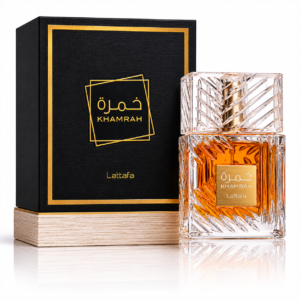
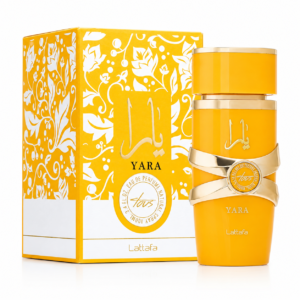
The question we get asked more than any other by UK customers who are new to Reef or Lattafa is a version of the same thing: “How is this cheaper bottle lasting longer on me than the designer perfume I paid four times as much for?” It’s a fair question, and the honest answer isn’t marketing — it’s chemistry and business model, and once you understand it, you’ll shop very differently.
What “Concentration” Actually Means
Every perfume is a mixture of aromatic oil dissolved in alcohol (or, in the case of attars and oils, a carrier oil with no alcohol at all). The percentage of aromatic oil in that mixture is what the industry calls concentration, and it’s the single biggest driver of how long a fragrance lasts and how far it projects.
- Eau de Cologne (EDC): roughly 2–4% oil
- Eau de Toilette (EDT): roughly 5–15% oil
- Eau de Parfum (EDP): roughly 15–20% oil
- Extrait de Parfum / Pure Perfume: roughly 20–30%+ oil
- Attar / Oil-based: no alcohol at all — often 100% oil, sometimes blended with a carrier oil, with very high aromatic density
Most well-known designer fragrances sold in UK department stores sit in the EDT or standard EDP range. A large part of what you’re paying for at that price point is brand licensing, packaging, advertising, and retail markup — not necessarily a higher concentration of oil than what you’ll find in a well-made Arabian-house alternative.
Where Reef and Lattafa Fit
Middle Eastern perfume houses generally operate on a different commercial model. They sell in higher volume, with far less spent on celebrity advertising and glossy retail counters, and route more of the cost of the bottle into the actual concentration of the fragrance oil. Many Lattafa releases are formulated at true Eau de Parfum strength or above. Reef’s collection leans toward rich, oud-forward bases that are inherently long-wearing because of the raw materials themselves — oud, amber, and heavy musks are naturally slow to evaporate, regardless of the percentage they’re mixed at.
This is also why some of these fragrances get compared so directly to well-known designer names — not because they’re identical formulas, but because a skilled perfumer working with a similar note structure and comparable-or-higher concentration will naturally produce comparable performance.
The Practical Difference You’ll Notice on Skin
At lower concentrations, a fragrance’s top notes (the first thing you smell) fade within the first 30–60 minutes, and you’re left with a much fainter version of the base notes for the rest of the day. At higher concentrations, more of the full structure — top, heart, and base — stays present on skin for longer, and the base notes that remain are richer rather than a thin echo of the original scent.
That’s the actual mechanism behind “this lasts all day.” It isn’t magic, and it isn’t (as some assume) a sign of cheaper or synthetic ingredients — high concentration and long-wear can absolutely coexist with quality raw materials, which is exactly the combination these houses are built around.
How to Use This When You’re Buying
Don’t shop by brand name alone. Check whether a listing specifies EDP, attar, or oil — and treat that as more useful information than the price tag. A well-made attar at £25 will frequently outperform a £90 EDT in both longevity and projection, purely because of what’s actually in the bottle.
FAQs
Is a higher concentration always better? Not necessarily — it depends what you want. Higher concentration means stronger, longer-lasting, and more noticeable. For a light, easily-refreshed daytime scent, a lower concentration EDT can actually be the better practical choice, even though it fades faster.
Are attars stronger than EDPs? Generally yes. Attars are typically applied in smaller amounts precisely because they’re so concentrated — a couple of dabs goes further than several sprays of an EDP.
Why do some cheap perfumes not last, if concentration is the main factor? Concentration matters, but so does the quality of the raw materials used to reach that concentration. A high percentage of poor-quality synthetic oil can still fade unevenly or smell thin. This is why raw material sourcing, not just the percentage on the label, is worth paying attention to.
Ready to shop? the full Lattafa range or how notes work.