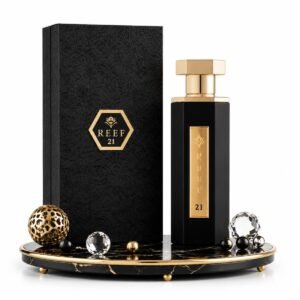
If you live near Edgware Road in London, the Curry Mile in Manchester, or Alum Rock and Sparkbrook in Birmingham, you already know these streets are full of small shops and market stalls selling Arabian perfume. They are a real part of British Arabic and South Asian community life, and some of them are genuinely excellent. But not all of them are, and knowing the difference before you spend your money matters more with perfume than with almost anything else you can buy on a market stall.
Where these markets actually are
| Area | City | What You’ll Find |
|---|---|---|
| Edgware Road | London | A concentration of Middle Eastern-owned shops selling major Gulf houses alongside Reef and Lattafa-style ranges |
| Curry Mile (Wilmslow Road) | Manchester | Long-established fragrance shops alongside restaurants, stocking Lattafa, Swiss Arabian and Al Haramain |
| Cheetham Hill | Manchester | Similar mix to the Curry Mile, generally competitive pricing |
| Alum Rock & Sparkbrook | Birmingham | A large number of small independent sellers, strong on attars and oils |
What’s genuinely good about buying this way
- You can smell before you buy. No online retailer can replicate this. If you’re genuinely unsure between two fragrances, testing in person is unmatched.
- Some sellers have decades of experience. The older, established shops on these streets often know their stock in real depth.
- Prices can be competitive, particularly if you’re prepared to browse a few shops rather than buy at the first stall.
Where the real risk sits
The honest problem isn’t these areas themselves, it’s the inconsistency within them. Alongside the genuinely reputable, long-standing shops, there are newer stalls that turn over quickly, sell unverified stock, and won’t be there if something goes wrong with your purchase. A few things to watch for:
- No fixed address or receipt. If a seller won’t give you a proper receipt with a business name on it, you have no real recourse if the bottle turns out to be diluted or fake.
- Pressure to buy quickly. A confident seller lets you smell, compare, and think. Pressure tactics are a red flag regardless of what’s being sold.
- No returns policy whatsoever. Cash-only market stalls very rarely offer any kind of return, which matters if a fragrance reacts badly on your skin once you get home.
- Batch inconsistency. Even genuine stock bought from an unofficial source can vary noticeably bottle to bottle if it hasn’t come through a proper supply chain.
Physical market vs specialist online retailer
| UK Market Stall | Specialist Online Retailer | |
|---|---|---|
| Test before buying | Yes, in person | No, but detailed note breakdowns help |
| Returns process | Rare to nonexistent | Documented, UK consumer law applies |
| Batch consistency | Variable, seller-dependent | Consistent, sourced directly |
| Accessible if something’s wrong | Only if the same stall is still there | Always, via a registered UK business |
| Requires travel | Yes | No, delivered nationwide |
Why Arabian perfume specifically attracts counterfeiting
Reef and Lattafa in particular have become genuinely popular in the UK over the past few years, and that popularity is exactly why they get targeted. A fragrance nobody has heard of is not worth faking, a fragrance thousands of people are searching for every month absolutely is. The same handful of bestselling scents, the ones you are most likely to be offered on a market stall, are also the ones most likely to have counterfeit versions circulating. This is not a reason to avoid the category, it is a reason to be a slightly more careful buyer than you would be for something less in-demand.
What genuine stock actually costs
Across a verified UK retailer, genuine 100ml Reef and Lattafa EDPs typically sit somewhere between £12 and £45, with most bottles landing around £20 to £30. That range exists for real reasons, formulation, concentration, and how established the specific fragrance is, not because some sellers are simply more generous than others. If you are offered a well-known 100ml bottle for a fraction of that, treat it as a signal to slow down rather than a bargain to grab. Genuinely old or clearance stock exists too, so a lower price is not proof of anything on its own, but it is always worth asking why.
Specific checks for Reef and Lattafa bottles
If you already know which fragrance you want and you are deciding whether a specific bottle in front of you is genuine, our dedicated guides go into far more detail than a general buying checklist can. See How to Spot Fake Reef Perfume and How to Spot Fake Lattafa Perfume for the exact packaging, batch code, and bottle details to check for each brand.
A realistic middle ground
You do not have to pick one or the other permanently. A sensible pattern many UK buyers settle into is testing new fragrances in person when they happen to be near one of these areas, taking a genuine interest in what a knowledgeable seller has to say, and then buying the actual bottle they want to commit to online, from a retailer with a documented returns policy. That way you get the sensory experience that only in-person testing offers, without carrying the full risk of an untraceable cash purchase for the bottle you actually take home and wear for months.
If you do buy in person, do this first
- Ask to see the batch code on the bottle base and check it matches what’s printed on the box.
- Check the cellophane wrap is tight and factory-sealed, not loose or resealed.
- Look closely at the printing, blurry logos or slightly-off spelling are common counterfeit tells.
- Ask directly whether there’s any return option if the scent doesn’t suit you. If the answer is vague, that tells you something.
Frequently asked questions
Is it safe to buy Arabic perfume from a UK market stall?
Many stalls and small shops on streets like Edgware Road or the Curry Mile are entirely legitimate and have been trading for years. The risk isn’t the location, it’s the inconsistency between individual sellers, so check for a proper receipt, a fixed business address, and be willing to walk away if something feels off.
Why do prices vary so much between market stalls selling the same fragrance?
Beyond normal competition, price differences can reflect stock source, older or degraded stock, or in the worst cases, counterfeit product. A price significantly below what the same fragrance costs from a verified UK retailer is worth being cautious about.
Can I return a perfume bought from a market stall if I don’t like it?
Usually no. Cash purchases from informal sellers rarely come with any return option, which is one of the clearest practical differences from buying through a registered UK retailer.
What a good market seller actually looks like
Not every warning sign is about avoiding a seller entirely, sometimes it is about recognising the ones worth going back to. A good, established seller on any of these streets will usually let you take your time, will happily talk through what a fragrance is actually built from rather than just its name, and will not flinch if you ask direct questions about sourcing or returns. If a seller seems genuinely knowledgeable, has clearly been trading from the same spot for years, and treats a question about authenticity as reasonable rather than insulting, that is a good sign in itself. The sellers worth avoiding are usually the opposite on every count: rushed, vague, and unable to tell you anything beyond the name on the box.
A note on attars and oil-based perfume specifically
Alum Rock and similar areas are particularly known for attars and oil-based perfume, which is a genuinely different category from the EDP sprays most UK shoppers are used to. Attars have no alcohol at all, they sit closer to skin, and quality varies even more than with EDPs because so much depends on the raw materials the seller is actually using. If you are new to attars, it is worth reading up on the format specifically before buying, since the usual EDP buying checks do not map across cleanly.
Our take
There’s nothing wrong with testing fragrance in person, it’s genuinely one of the best ways to find what suits you. The sensible approach for most UK buyers is to use these markets for discovery and testing, then buy the specific bottle from a retailer with a documented returns policy and consistent, directly-sourced stock. You can browse our full Reef and Lattafa range online with a clear UK returns policy on every order.