Arabian perfumery has gone from a niche interest among a small, dedicated community of UK fragrance enthusiasts to something you’re now genuinely likely to see on TikTok, in general conversation, and increasingly on department store shelves. This isn’t a passing moment, the numbers behind it point to a real, sustained shift in how UK shoppers think about fragrance. Here’s what the data actually shows, and what it means for anyone currently deciding whether to try the category.
The scale of the shift
Search interest in Arabian perfume has grown sharply. TikTok and Google searches for “Arabian perfume” grew by more than 63% during 2025 alone, a genuinely significant jump for a single year in any product category. This tracks with wider industry reporting: Mintel’s UK fragrance research has flagged affordable Arabic fragrance as one of the defining shifts in the entire UK fragrance market, not a small subcategory trend but something reshaping how the broader market is being written about.
The category’s growth isn’t confined to search interest either. Industry coverage has noted that EDP-format Arabic fragrances became one of the largest health and beauty categories on at least one major B2B wholesale platform before finally being overtaken by K-beauty in February 2026, evidence that retailers themselves are stocking and reordering this category at real volume, not just that shoppers are curious about it.
What the wider oud market looks like
| Metric | Figure |
|---|---|
| Global oud perfume market value (2025) | Approximately $4.6 billion |
| Projected global market value (2034) | Approximately $9.1 billion |
| Projected annual growth rate | Around 7.9% |
| Projected online oud sales growth rate | Around 10.8% annually through 2034 |
That online-specific growth figure, outpacing the wider market’s overall growth rate, is particularly relevant for UK shoppers, since it points to online retail specifically as where this category is expanding fastest, rather than growth being driven mainly by physical retail or a handful of flagship stores.
Why now, specifically
A few genuine factors have converged rather than one single cause explaining all of this. Social platforms, TikTok especially, reward dramatic “first impression” fragrance content, and Arabian perfumery’s high-projection, distinctive character performs unusually well in that format compared with subtler Western fragrances. Cost of living pressure across the UK has also pushed more shoppers to actively seek out fragrance that performs closer to designer level without the designer price tag, and industry commentary has specifically described Arabic fragrance houses as offering “affordable creations crafted by high-profile perfumers” that appeal to increasingly well-informed consumers rather than shoppers simply looking for the cheapest option available.
There’s also a genuine product-quality story underneath the trend data. Middle Eastern perfumers have worked with oud, amber, and musk for centuries in ways most Western fragrance houses have historically left largely unexplored, meaning UK shoppers discovering the category now are often encountering compositions with a level of richness and base-note complexity that’s simply less common in mainstream EDTs at a similar price point.
What this means if you’re new to the category
- You’re not late to a fad, you’re early to an established shift. This is multi-year growth backed by real retail and search data, not a single viral moment likely to fade within months.
- Choice is genuinely improving. As demand grows, more houses and a wider range of styles become available to UK buyers, which is good news if your first attempt at the category didn’t quite land.
- Scrutiny matters more, not less, as popularity grows. Growing categories attract counterfeiting alongside genuine demand, so buying from a specialist retailer with direct sourcing becomes more important, not less, as the category becomes more mainstream.
Where the category is likely headed next
Based on current trajectory, expect continued growth in online-specific sales, more mainstream retailers experimenting with stocking Arabic fragrance houses, and increasing crossover between Arabian perfumery techniques and Western fragrance trends, gourmand notes, layering culture, and note-first searching are all areas where the two traditions are already visibly influencing each other. If anything, the current level of visibility looks more like an early stage than a peak.
How this compares to other recent fragrance trends
The UK fragrance market has seen plenty of trend cycles over the years, celebrity-fronted launches, single-note obsessions, and seasonal collections that come and go within a year or two. What makes the Arabian perfumery shift look structurally different is that it is not organised around a single brand, celebrity, or even a single note. It spans multiple independent houses, a wide range of price points, and several distinct sub-styles (gourmand, oud-forward, musk-led, floral-oud) all growing simultaneously. Trends built around one product tend to fade quickly once that specific thing stops feeling new. Trends built around an entire tradition with genuine depth to explore tend to have considerably more staying power, which is a large part of why this looks more like a genuine market shift than a single viral cycle.
What retailers and industry commentators are actually saying
Beyond the headline growth figures, the framing used by people actually working in the industry is worth paying attention to. Descriptions of Arabic fragrance houses offering “affordable creations crafted by high-profile perfumers” for “well-informed consumers” signal something specific: this is increasingly being understood as a genuine quality proposition, not simply a budget alternative to designer fragrance. That distinction matters, because trends built on being cheap tend to lose ground the moment something even cheaper appears. Trends built on genuine product quality at a fair price tend to hold their position even as the market gets more crowded.
What to watch for next
- More crossover launches. Expect to see Western fragrance houses releasing more oud and amber-forward fragrances as they respond to demonstrated demand.
- Wider retail availability. As reorder volume climbs, expect more mainstream UK retailers to begin stocking established Arabic houses directly, not just specialist sellers.
- More scrutiny on authenticity. As the category grows, expect (and look for) more retailers offering transparent sourcing information, batch details, and clear returns policies as a genuine point of differentiation.
Frequently asked questions
Is Arabian perfume just a TikTok trend that will fade?
The data suggests otherwise. Multi-year search growth, retail reorder volume, and wider fragrance industry reporting all point to a sustained shift rather than a short-lived viral moment.
Why is Arabic fragrance growing faster online than in physical retail?
Specialist online retailers can offer a far wider range of houses and fragrances than physical UK stores typically stock, and shoppers researching the category tend to start that research online, both of which favour online-specific growth.
Does the growth in popularity affect authenticity risk?
Yes, generally. Popular, high-demand fragrances are more likely to attract counterfeiting, which makes buying from a retailer with a direct sourcing relationship and a documented returns policy more important as the category grows.
Explore the category
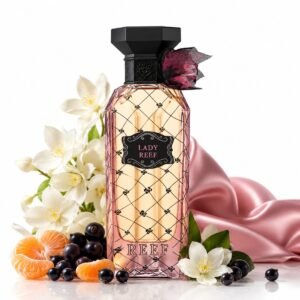
If you’re curious what’s driving all this growth, our full Reef and Lattafa range is a genuine, directly-sourced starting point, and our Find My Perfume tool makes it easy to find where to begin.